DANIEL MORRIS HIGHLIGHTS ‘FIRST FARMER ON SCENE’ – A NEW INITIATIVE WHICH ARMS PEOPLE WITH VITAL SKILLS TO HELP THOSE WHO ARE INJURED IN REMOTE AREAS
Despite representing just one per cent of the UK workforce, agriculture accounts for 18.5 per cent of all work-related deaths, with farm workers 20 times more likely to be fatally injured than the average across other industries.
This makes farming and agriculture one of Britain’s most dangerous industries to work in.
The farming industry is the lifeblood of Shropshire – its workers the beating heart of the county. Yet, by its very remoteness, our green and pleasant land presents a danger to those who would put food on its table.
Accidents happen; incidents occur. And, in a rural setting like ours, vital time can often be lost to any casualty simply because they are ‘out in the sticks’.
Thankfully, through a new learning programme, a treasured local charity is making it one of its many missions to give those who may be able to be the first on the scene of any emergency the tools they need to save lives.
Set up and run by Midlands Air Ambulance Charity, the First Farmer on Scene course is designed to give learners the skills and confidence to manage a casualty at the point of injury before the arrival of emergency teams.
This practical three-hour course covers key skills including casualty and scene management, with hands-on practice under expert tuition, including simulated activities.
Written and delivered by experts in pre-hospital care, the course is suitable for anyone working or living in a rural environment and any person who feels they may need to give immediate support to any casualty at their point of injury.
As Midlands Air Ambulance Charity’s head of education and training Emily Browne relates, the course has been designed to empower residents of Shropshire in first aid, and give them the confidence to play a vital role in saving lives.
“I very much grew up in a rural community and recognize the need in such communities for this first aid training and the importance of it,” she said.
“Farming communities need us to be able to offer that training to them.
“These communities are often very stoic; they’re people who keep carrying on until they can’t carry on. But then what happens at that point?
“This is about allowing them to have the knowledge and training to do something when accidents or incidents happen as a stopgap before the emergency services arrive.”
As Emily iterates, First Farmer on Scene is, more often than not, about giving people in rural communities the confidence to follow their gut instinct in emergency situations.
“The course may be called First ‘Farmer’ on Scene, but of course it also applies to horse riders, mountain bikers, and anyone in the rural world who could be the first on the scene at any emergency,” she said.
“It’s about showing people what they can do to help when they’re in the middle of a field, miles away from anything, and the key actions they can take.
“We know that, for example, survival rates increase with bystander CPR. Survival – and good quality survival – happens if people are able to implement CPR before an ambulance or helicopter arrives.
“In many ways, it’s actually often common sense. A lot of what the course involves is saying ‘that instinct that you’ve got, that’s right’, and in this respect it’s about giving people the confidence to do the thing they think they would have done anyway.”
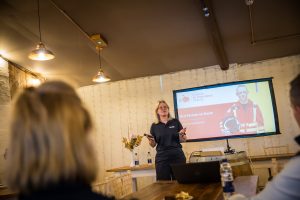
So far, the uptake for the course has been strong.
“It’s been absolutely amazing,” said Emily. “I must admit, we weren’t sure that this would be the case as farmers particularly are incredibly busy people and are the people that struggle to get away from work, but all of our courses have been full.
“We’ve started to have waiting lists and higher demand for more courses, so that is amazing.”
A strong advocate of the course and the idea behind it is Shropshire resident Wayne Foxall, who, in 2024, suffered a frightening cardiac arrest while out metal detecting.
“A long time ago I was made aware that I had high cholesterol, and it wasn’t controllable,” said Wayne.
“I have hyper cholesterol anemia. It’s a genetic condition that basically means my body doesn’t process cholesterol very well – it retains it. So over my life my arteries have been clogging up.
“I cut out red meat about 10 years ago and then I stopped eating meat altogether about seven years ago and just changed my diet to do everything I could to reduce my cholesterol. I knocked it down about 20 per cent.
“Then, a couple of years ago, I kept getting these odd dizzy spells every now and then – feeling a bit sick.
“I used to do a lot of off-roading and trialling on farms and stuff like that in events. I packed that in and I bought a metal detector and asked the farmer up the road from me if I could use his land.
“It was the second time I was out in his field – so away from everybody. That was when it happened.
“I called my missus to say I didn’t feel very well. Now, for me to do that, I must have been feeling bad, because I don’t ask anybody for anything.
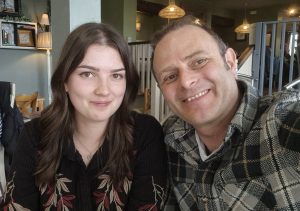
“She jumped in the car and came up. When she got to where I was she said I was sitting at the side of the country lane and then she just saw me fall backwards. She ran over to me and I was just white, frothing at the mouth.
“I had basically died at that point, and she was just freaked out, shouting for help, and just by chance there was a nurse walking a dog not far away who heard her and came running.
“She gave me CPR straight away and called for an ambulance. Two land ambulances turned up with students. There were six paramedics, but they couldn’t do anything because my main artery was completely blocked.
“They called the air ambulance, which came. They were struggling to settle me because I was agitated, and said I wouldn’t make it to hospital unless I was in a stable condition.
“Another air ambulance with a doctor on board arrived and they put me in a coma. I came around a couple of days later in Royal Stoke Hospital in intensive care.”
Wayne’s ordeal had been traumatising, to say the least. Yet he pulled through, and his message about what was instrumental to his continued quality of life is clear.
“I was in hospital for about three weeks in total,” he said. “I spoke to one of the air ambulance doctors and they said that if that nurse hadn’t been there, I wouldn’t have made it.
“To have an out-of-hospital cardiac arrest, the survival rate is less than 10 per cent.
“I’ve got a bit of brain damage and a bit of heart damage, but I should be in a wheelchair now and I’m not. This is due to the quality of the CPR I had at the scene. Doctors have said it was like winning the lottery. For people to take this course, and to be able to help people like me as that nurse did, is a no-brainer. I think the question should be, why wouldn’t you do it?”
Specifically, those who take part in the First Farmer on Scene course learn a structured approach to dealing with any casualty who is unwell or injured.
“We teach a systematic approach which is easy to recall in an emergency situation,” said Emily.
“The course includes hints and tips for things like getting the emergency services in rural environments – how to think about access for helicopters landing, and those kinds of things.
“In terms of the clinical information that the course imparts, CPR is a big one because it’s a life skill everybody should have.
“So, we will always cover CPR and then bleed control because we recognise that in the agricultural industry, injuries where this needs to be handled are very common.
“It’s all just about helping people to do the right thing in an emergency situation and, ultimately, helping everyone in the rural community to be able to save lives.”
For more information, and to book yourself onto the course, visit www.